
Horror, Reviewed Through a Subjective Objective
- Viktoria
- Jul 21
- 5 min read

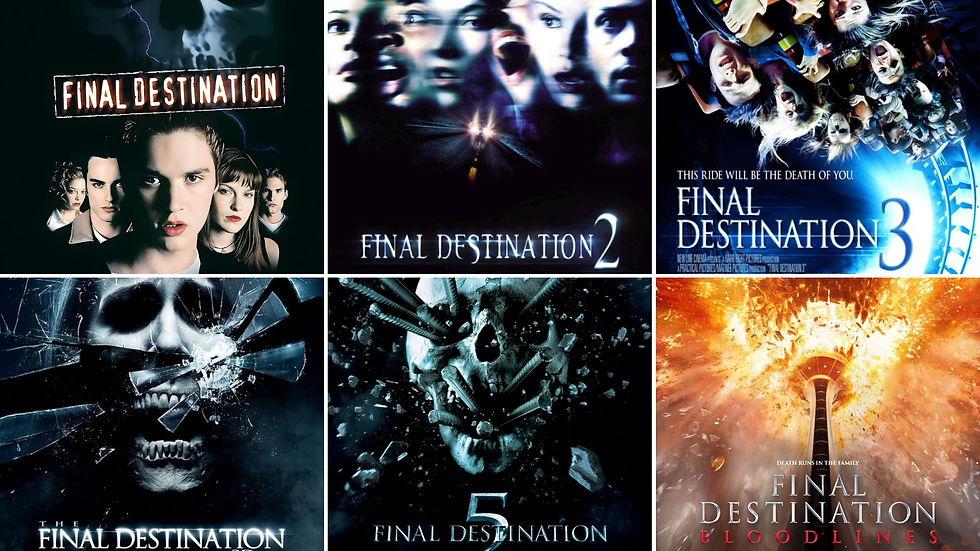
I grew up in a village with no way of getting my hands on any hard copies of horror movies. I couldn’t even get an online copy of the movies because, one, I was too young, and two, we didn’t have the money for internet access. Our local TV stations rarely played any horror movies, and if they did, I wasn’t allowed to watch them. So my horror enjoyment came down to going to friends’ houses and watching them there whenever I could. I wouldn’t call it sneaking around exactly, but it most definitely felt so. Horror somehow became the forbidden fruit I could enjoy only on special occasions. As you can imagine, with limited access to the genre, I “missed” most of the great ones. Scream, 28 Days Later, Final Destination… These were titles I got acquainted with way later in life. But where am I going with this? Well, today I would like to discuss what it feels like, in today's climate, to watch a movie that came out almost 20 years ago, and how it affects my view of the genre as a whole.
I think we can all agree that movie making, especially in the horror genre, has changed a lot in the past 20 years. Makeup, special effects, scores… They all evolved to an incredible level. Horror has always been multi-layered and shrouded in subliminal messages. In a way, it always held up a mirror to society. But I feel like that’s enhanced today. It feels like modern horror movies are a bit more blunt, not trying to hide the message in plain sight; instead, they say it straight to the audience’s face. So, how does that compare to the horror movies of the past?
The shift in motives is definitely noticeable. Sex is no longer at the center of attention. Young people aren’t punished anymore for having sex; instead, they deal with the emotional aspects of interpersonal relationships. If a movie does include some kind of intimacy, the motive is usually subverted. For example, in Bones and All (2022), cannibalism is used as a metaphor for deep, uncontrollable urges and young love. We can also notice a shift from traditional slasher movies to more sophisticated, elevated horror. This means that gore doesn’t do it anymore for the modern horror viewer. They want isolation, cult manipulation, and slow-burning dread. Modern horror doesn’t shy away from pointing out social and systemic injustice either. It dives into topics like race, class, and gender to point out the obvious problems society is facing at a given time.
So, after confirming what’s scary today, let’s turn a bit more towards the movies that walked so modern horror could run. Lately, I’ve been using “it’s scary but not in a traditional sense” in a lot of my reviews, almost as an excuse. What’s scary to the modern horror lover probably won’t have the same effect on the older generations, and considering I tend to examine both sides of the coin before saying anything out loud, I understand that standards have changed. But just because they changed doesn’t mean something isn’t scary. Some probably still remember Halloween as a movie that made them feel uneasy. When I watched it for the first time, the scares didn’t land quite as they were supposed to. Yes, I already knew everything there was to know about it since it’s one of the most popular slashers out there, but I don’t think that was the issue. The real problem is that the movie was predictable. Most slasher movies follow a similar formula, so you can usually predict what’s about to happen.
28 Days Later is another great example of a movie that didn’t age well but somehow still kept its cult classic status. I remember watching it and mainly laughing at whatever was happening on the screen. The camerawork was outdated, the plot was at times illogical, and frankly, the infected weren’t that scary. And just like with Halloween, I could usually predict what was going to happen and when.
I don’t think we can say the same about modern horror. Today, everyone tries to be different, distinct, and to bring something groundbreaking to the table. Of course, overworked franchises like The Conjuring don’t count here. But if you look at modern horror hits like Get Out (2017), Us (2019), The Invisible Man (2020), or even the recent Obsession (2025), they all have something in common. They all try to touch something deeper in us. They try to reach our subconscious and pull at our biggest fears using social injustice and generational trauma as the catalyst. Older horror did something similar, but it was reaching for different corners of our minds. It was trying to scare us with monsters, aliens, and the occult. Fear was kindled by the unknown and the unfamiliar. There were, of course, psychological horror movies as well, but they weren’t as popular as they are today, nor did they have the same effect as they do today. But there’s one exception to this rule.
The Exorcist is still as terrifying now, more than 50 years later, as it was when it came out. Maybe it’s just me, but whenever I see Regan’s possessed face in an image, I get an uneasy feeling in my stomach. The pale skin, yellow eyes, and gashes all over her face are extremely disturbing in a way I can’t explain. But that’s not the only thing that gets to me whenever I watch the movie. Regan loses control of her body when the demon, which is pictured as a masculine figure, possesses her. This alone is a metaphor for the changes that are happening to her when she enters puberty. Regan’s mother, desperate to help her child, hands her over to male religious authorities who will cleanse her of these impurities. The fact that puberty for a woman was marked by society as something sinful and monstrous is simply horrifying, but it opened the way for debate on the topic of sexual revolution and women’s liberation. The Exorcist laid the foundation for a large number of modern horror movies that deal with the topic of patriarchal control.
I’ve said this before: horror has always served as society’s mirror. What’s happening in real life will be mirrored in the movies that deal with our biggest fears. But the thing is, those fears change depending on the generation that’s watching the movies. For example, what used to scare Baby Boomers won’t affect Gen Z the same way. We all grew up in different time periods, consuming different news, watching different historical events unfold. The fact that I find The Thing (1982) funny doesn’t mean I don’t respect the mastery or skill behind it. It’s still a movie that portrays paranoia in a beautifully chilling way. But the monsters do look outdated by today’s standards, and there’s nothing anyone can do about that. And even though generations might disagree on a lot of things, we can definitely agree on one thing: horror will always prevail because it’s the only genre that’s honest enough about the errors of society.


Comments